RPZ Valve Education Hub
Everything you need to understand reduced pressure zone valves — how they protect drinking water, where they are used and how they are kept compliant.
What is an RPZ valve?
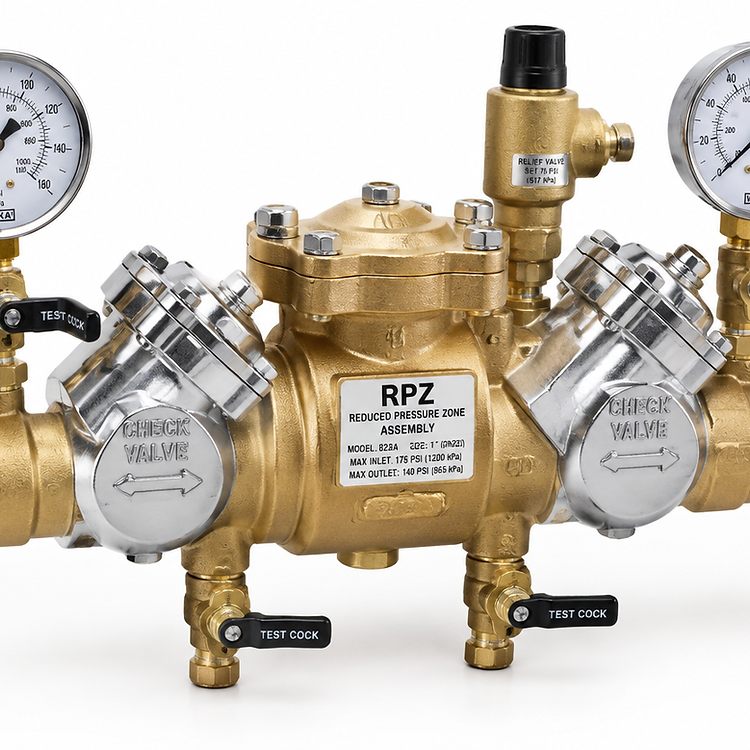
A reduced pressure zone (RPZ) valve is a mechanical backflow prevention device. It is designed to stop contaminated water flowing back into the public drinking water supply if the supply pressure drops or a downstream system pushes water the wrong way.
Inside the valve body are two check valves in series with a relief valve between them. Under fault conditions the relief valve opens to atmosphere, discharging the potentially contaminated water rather than allowing it to reach the mains. This makes the RPZ valve one of the most robust mechanical forms of backflow protection available.
Learn more about RPZ valves
How RPZ Valves Work
The internal components and the physics that make an RPZ valve protect the supply.
Read moreTesting Requirements
When and how RPZ valves must be tested, and what the test checks.
Read moreCommon Problems
The faults that cause RPZ valves to fail — and how they are fixed.
Read moreRPZ vs Double Check Valve
The difference between the two devices and when each is appropriate.
Read moreWhere RPZ valves are used
RPZ valves are typically found where a commercial water system carries a backflow risk that a simple check valve cannot adequately protect against. Common locations include: